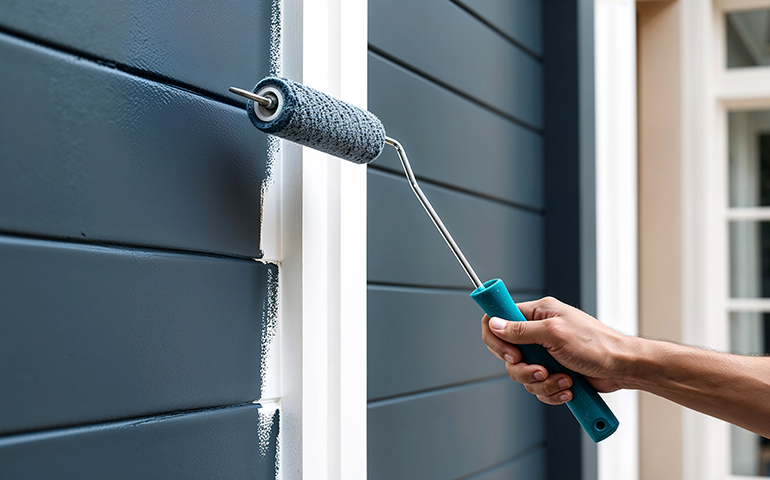

Exterior paint does more than change how your home looks. It forms a thin, flexible skin that takes the first hit from rain, sun, wind, and heat changes. When that outer layer stays sealed, it slows water from soaking into siding and keeps small cracks from turning into leaks. Most exterior coatings cure into a film around 3–5 mils thick, yet that small layer can block a lot of damage when it’s chosen and applied well.
- It sheds water instead of holding it
- It reduces UV wear on wood and trim
- It helps seal tiny gaps at joints
With routine care, that barrier can help key materials last longer.
Rain and Moisture Defense
Water is the main driver of exterior wear. When siding stays wet, wood fibers swell, paint loosens, and fasteners can rust. Many modern acrylic latex paints are water-resistant, so liquid water beads and runs off while the wall can still release water vapor. That matters because trapped moisture can cause peeling from the inside out. Gutters, splashback, and shaded walls raise the risk, so paint works best with good drainage.
- Keep soil and mulch a few inches below the siding
- Fix gutters so they don’t overflow onto walls
- Extend downspouts to move water away
When water is managed, a solid paint film helps prevent repeated wetting from turning into rot.
Stopping Sun and UV Wear
Sunlight doesn’t just fade color; it breaks down binders in paint and the surface of exposed wood. UV rays can make older oil-based coatings chalk, leaving a powdery layer that slowly washes away. Acrylic resins handle UV better because they stay flexible and resist cracking. Dark colors often warm up more in direct sun, which adds stress on the coating. In many climates, south and west walls age faster and may show clear fading within months.
- Look for “100% acrylic” for steadier outdoor performance
- Use UV-resistant pigments for deep colors
- Plan extra checks on the sunniest walls
By slowing UV damage, paint protects both the color you see and the surface beneath it.
Handling Heat and Cold Swings
Weather isn’t only water and sun; it’s constant expansion and shrinkage. Wood, fiber cement, and masonry move a little as temperature and humidity change. If paint is too brittle, it can crack along joints and let water in. Acrylic paints stay more elastic, which helps them move with the surface. In freezing areas, the freeze-thaw cycle is hard on porous materials because water expands about 9% when it turns to ice.
- Seal joints so water can’t enter before a freeze
- Avoid painting when nights drop near 50°F unless approved
- Pick coatings rated for your local temperature range
A flexible, well-cured coating helps stop hairline cracks from growing into repairs.
Wind, Dust, And Impact Protection
Wind-driven rain can push moisture into seams, while dust and sand act like fine sandpaper. Over the years, that abrasion can thin the coating and open the door to more water and sun damage. Paint also softens minor impact wear from debris, lawn tools, and day-to-day bumps, especially on trim and lower wall areas. Smoother, cleanable finishes can shed grime, so less dirt sticks and holds moisture against the wall.
- Rinse siding a few times a year in dusty areas
- Use a tougher finish on trim and high-touch spots
- Protect the wall base with splash blocks or gravel borders
Maintained paint takes the wear first, so your siding does not have to.
Blocking Mold and Mildew Growth
Mold and mildew need moisture and something to feed on. In many homes, “food” is the thin layer of dirt, pollen, and organic residue that builds up on shaded walls. If the surface stays damp, colonies can form and stain the paint. Many exterior paints include mildewcides that slow growth, though these additives can weaken over time. Cleaning and airflow still matter, but the right coating helps reduce repeat staining.
- Wash problem areas with a mild cleaner before repainting
- Trim back shrubs to improve sun and air movement
- Use paint labeled for mildew resistance on shady sides
A cleaner, drier surface is harder for mold to hold onto, keeping paint and siding in better shape.
Sealing Cracks Before They Spread
Small openings are where weather damage often begins. Hairline cracks let water into wood ends, joints, and sheathing seams, and that moisture can travel farther than you’d expect. Paint helps seal porous surfaces and, with good caulk, closes gaps around trim and wall openings. Some elastomeric (stretchy) coatings can bridge tiny cracks up to about 1/16 inch, which helps on stucco and masonry with fine checking.
- Caulk trim joints, corner boards, and around pipes
- Spot-prime bare wood or filler so paint bonds evenly
- Track repeating cracks that may signal movement
Sealing early lowers the chance that a small crack turns into swelling, rot, or indoor leaks.
Primers and Paint Chemistry Basics
Good protection starts under the color coat. Primer is designed to soak into the surface, lock down loose fibers, and create a uniform layer for paint to grip. Bare wood often needs a stain-blocking primer to stop tannins from bleeding through. Masonry may need a primer that handles alkalinity, since new concrete can have a high pH that weakens some coatings. Many exterior systems use one primer coat and one to two finish coats.
- Primer boosts adhesion and helps cut peeling
- It evens out porous and patched areas
- It can block stains from knots or old watermarks
When primer and paint match, the layers cure together and behave like one barrier.
Choosing The Right Finish
Finish is not only about shine; it affects how well paint sheds water and resists dirt. Flat paint hides surface flaws but can hold grime and may wear faster in high-contact areas. Satin and low-sheen finishes are easier to wash and still look smooth on siding. Semi-gloss is common for trim because it cleans well and often resists moisture on edges. The goal is to match the finish to the surface and exposure.
- Use flat or low-sheen on broad siding
- Use satin on areas that get handled or splashed
- Use semi-gloss on doors and trim
The right finish helps the coating stay intact, which keeps the weather from finding weak spots.
Prep And Application Matters
Even high-quality paint can fail if the surface isn’t ready. Dirt, loose paint, and chalky residue stop new paint from bonding. Moisture in the wall can also cause bubbling and peeling, so wood should feel dry and often test below about 15% moisture before coating. Sanding the feathers’ edges so water can’t catch and lift the film. Manufacturers set a spread rate to reach the right thickness, not a thin coat.
- Wash, scrape, and sand until the surface is sound
- Repair soft wood and set nails before priming
- Apply in steady weather, avoiding rain for 24–48 hours
When prep is solid, the coating cures into a tight seal that stands up to storms and seasons.
Plan A Smart Paint Cycle
Exterior paint protects better when you treat it like routine maintenance, not a one-time job. Walk your home once or twice a year and look for early clues: small cracks, bare spots, soft caulk, or mildew stains. Many homes repaint about every 7–10 years, while harsh sun, salty air, or heavy rain can shorten that window. Quick cleaning and touch-ups help keep the film unbroken.
- Keep a labeled jar of touch-up paint for fast fixes
- Re-caulk joints when you see gaps, not when leaks appear
- Clean siding so dirt doesn’t hold moisture
If you want help picking a paint plan that fits your home and weather, talk with Arroyo Custom Builders DBA.