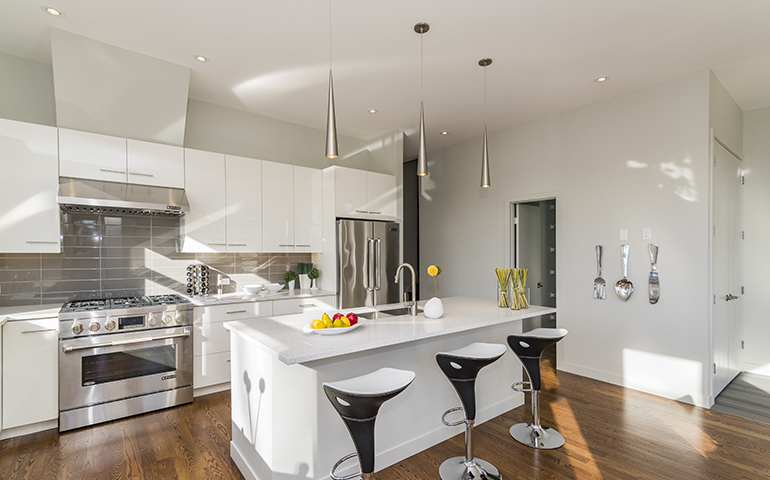
A kitchen remodel doesn’t have to mean moving every wall to make it easier to use. The fastest wins come from updates that shorten steps, keep items near where you use them, and make storage reachable. The National Kitchen & Bath Association notes that the three main work centers should form a triangle with a total travel distance of no more than 26 feet, with each leg 4–9 feet.
- Think in “zones” for cooking, prep, and cleanup
- Put everyday items between waist and eye level
- Aim for clear paths with no bottlenecks
These basics guide every storage choice, from drawers to tall pantries, and they pay off daily.
Measure Your Daily Routes
Before you pick cabinets, watch how you actually cook for a day or two. Note where you stop to wash produce, chop, cook, plate, and load the dishwasher. Small layout tweaks can remove frequent backtracking and cut down on collisions. NKBA guidance suggests a work aisle of at least 42 inches for one cook and 48 inches for multiple cooks, measured between counter fronts and appliances.
- Mark “hot spots” where doors collide or people pause
- Sketch your main paths with a simple floor plan
- Prioritize the shortest route from sink to stove
Even a tape-measure walk-through can reveal where storage is slowing you down.
Drawer-First Base Cabinet Upgrade
Swapping lower doors for wide, full-extension drawers is one of the most useful storage changes. Drawers bring items to you, so you don’t kneel and reach into dark corners. For heavy pots, look for slides rated for the load you expect; common undermount options are listed around 75 lb, and some sets are rated 100 lb. That rating assumes solid joinery and proper mounting.
- Put pans and lids in separate, shallow top drawers
- Store mixers and Dutch ovens in deep bottom drawers
- Add peg systems so stacks don’t shift
If you cook often, plan at least one “landing drawer” near the cooktop for tools you grab mid-recipe.
Pull-Out Pantry That Works
A tall pantry cabinet is great, but shelves alone can hide items behind other items. A pull-out pantry turns that depth into visibility and reduces waste from forgotten food. Adjustable shelves are often set on a hole system, letting you change spacing in small increments as needs change for quick checks.
- Keep breakfast items together: cereal, mugs, and coffee
- Use clear bins to group snacks and baking supplies
- Reserve one shelf for “back stock” duplicates
When everything faces forward, you’ll shop with a clearer list and avoid buying doubles.
Corners Without the Crawl
Corner base cabinets can waste space unless you add hardware that brings storage out to you. Modern solutions include rotating trays and swing-out shelves that clear the door frame. The best choice depends on what you store: bulky cookware needs wider, stronger platforms, while spices fit on smaller trays. Measure the door opening before you choose a system so items don’t snag.
- Use a corner for large, odd-shaped items you rarely stack
- Choose full-swing hardware if you want every inch reachable
- Avoid stuffing corners with everyday tools you need daily
When corners become usable, you free up prime drawers for the items you touch most.
Landing Space Near Key Zones
Storage works best when it supports where items “land” during cooking. NKBA recommends at least 24 inches of counter landing area on one side of the main sink and at least 18 inches on the other side. That space becomes your sorting station for produce, dirty dishes, and drying. Keep it clear by storing soap, scrubbers, and backups inside the sink base.
- Store cutting boards and colanders in a vertical slot by the sink
- Put plates and bowls in drawers near the dishwasher unload path
- Keep towels and soap refills in a shallow sink drawer
When landing zones stay open, you’ll move through prep and cleanup with fewer pauses.
A Smoother Cleanup Sequence
Cleanup is a workflow, not a single spot. Place trash, recycling, and dishwasher access so you can scrape, rinse, and load in one motion. NKBA suggests the primary dishwasher should be within 36 inches of the sink and calls for at least 21 inches of standing space in front of the open door. It also recommends at least two waste receptacles, one near the sink and another for recycling.
- Add a pull-out trash next to the sink base
- Keep detergents in a narrow caddy by the dishwasher
- Use a small “drying zone” cabinet for racks and towels
These small placements cut the time you spend circling the kitchen after meals.
Power and Small-Appliance Storage
Counter appliances can crowd the work surface and block your prep space. An appliance garage, a mixer lift, or a dedicated “coffee bar” cabinet can reclaim room while keeping cords under control. Typical guidance for the gap between a countertop and upper cabinets is about 18 inches, which affects where you can park appliances. Plan power early so you’re not running cords across the sink or cooktop.
- Put outlets inside appliance garages for a closed-door look
- Store the most-used appliance on the easiest-to-reach shelf
- Keep cluttering out of the prep zone
A simple rule helps: if you use it daily, it should be reachable in one move.
Light That Helps You Work
Lighting is part of the workflow because it reduces mistakes and speeds up tasks like chopping and reading labels. Many lighting references tied to IES guidance put countertop task lighting around 300–500 lux (about 30–50 foot-candles). Under-cabinet LEDs aimed toward the front of the counter help reduce shadows from your body. Good light also makes drawer dividers and pantry bins easier to scan.
- Use a dimmer so the same lights work for cooking and evening
- Light the inside of pantries so shelves don’t disappear
- Add toe-kick night lights for safe late snacks
With better lighting, you’ll spend less time searching and more time cooking.
Dividers, Inserts, and Toe-Kick Space
Once cabinets are in, the right inserts keep storage from turning into piles again. Simple dividers separate sheets, trays, and cutting boards so they don’t topple. Drawer inserts create “homes” for utensils and wraps. Toe-kick drawers can turn that low strip under base cabinets into long, slim storage for items you rarely use, like large serving boards.
- Use vertical dividers near the oven for baking sheets
- Add a shallow drawer for foil, wrap, and bags near prep
- Store picnic gear or table linens in toe-kick drawers
These finishing pieces cost less than major layout work but protect the workflow gains for years.
Plan, Build, Enjoy the Routine
The best kitchen updates feel invisible because they match how you cook. Start with measurements and paths, then choose storage that puts the right item at the right height, near the right task. Use key layout numbers—like a 42–48 inch work aisle and a work triangle under 26 feet—as guardrails while you make choices.
- List your top 20 items and design storage around them first
- Keep counters open near the sink and cooktop for landing space
- Pick hardware and inserts that keep categories separate
If you’re ready to turn these ideas into a clear plan and a clean install, contact Arroyo Custom Builders DBA.